An ecocathedral is a place where plants, animals, and humans work together. Endlessly, without a plan, and with free energy.
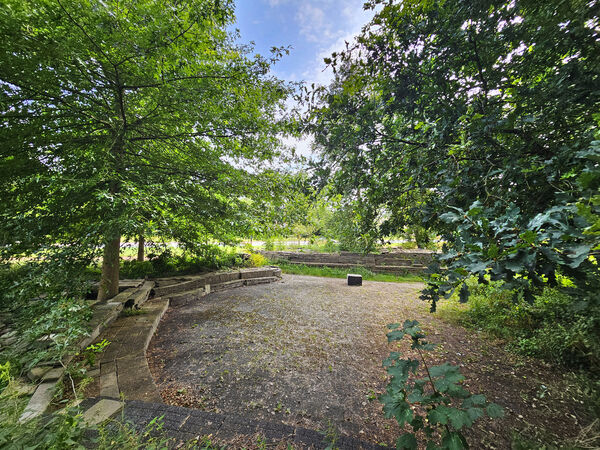
In practical terms, this means that it concerns an area (private or in public space) that is not maintained in the traditional way using extensive maintenance, but where natural processes are given time. Selective planting, prioritizing diversity, is only applied during the creation of an ecocathedral. Over the years, plants and shrubs may be added, but without disturbing the existing vegetation.
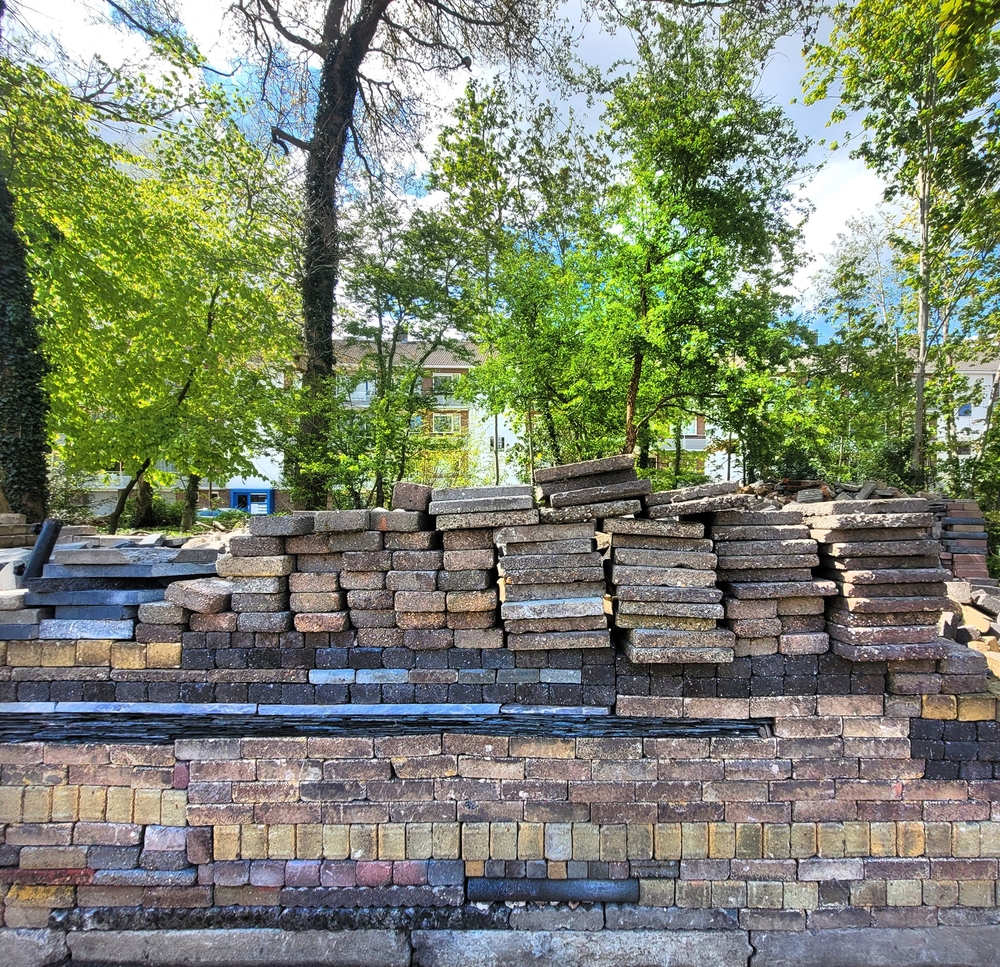
Variety can also be introduced into the landscape by constructing structures using natural materials (for example, stones left over from paving work). No cement or mortar is used in this process, allowing small animals and plants to nest in the holes and crevices.
The term ecocathedral was coined by Louis G. Le Roy (1924 – 2012). The word consists of two parts, where "eco" stands for nature and "cathedral" for culture. With this, he wanted to indicate that nature and culture must work together. They need each other: a symbiotic relationship.
Long term: Cathedral thinking
Building an ecocathedral is a generative process that spans dozens of generations. This long-term thinking is also known as cathedral thinking , because the construction of cathedrals sometimes took centuries. The people who built the cathedrals knew that they would never see the final result. In a time when short-term thinking is considered more important, future generations are often forgotten, and we do not stop to think about how we are leaving the world for our grandchildren. We should be good ancestors again, according to Roman Krzanick in his book " Good Ancestor ".
Le Roy described it as follows:
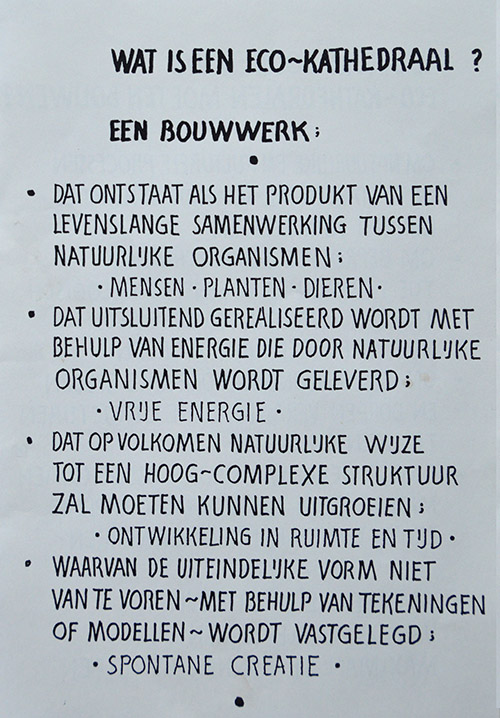
What is an ecocathedral?
An ecocathedral is a structure:
- that arises as the product of a lifelong collaboration between natural organisms:
- plants - animals - people - that is realized exclusively with the aid of energy supplied by natural organisms:
- free energy - that will have to develop into a highly complex structure in a completely natural way:
- development in space and time - whose final form is not determined in advance—by means of drawings or models:
- spontaneous creation
In 2005, the Le Roy Garden was formally designated as an ecocathedral in a letter of intent between the Municipality of Heerenveen and the TIJD Foundation .