stacking tips
On the one hand, stacking is simple. It is in our genes. Put a bunch of Lego bricks in front of a child and they will start stacking on their own.
However, stacking ecocathedral structures is a craft in itself and requires years of practice to create structurally sound and sustainable works. Repetition is important: making mistakes, tearing down, stacking again, continuing, stepping back, and above all, keep trying!
In the " stacking for dummies " section, you will find a few simple tips that might come in handy if you want to get started as an ecocathedral stacker yourself. Will you keep us updated on your progress? We would love to see your creations in our mailbox:
The structures in ecocathedrals are made from materials that are freely available. In England and France, these are large quantities of natural stone found on the surface there. The stacking technique is called Dry Stone Walling and Pierre Sèches there.
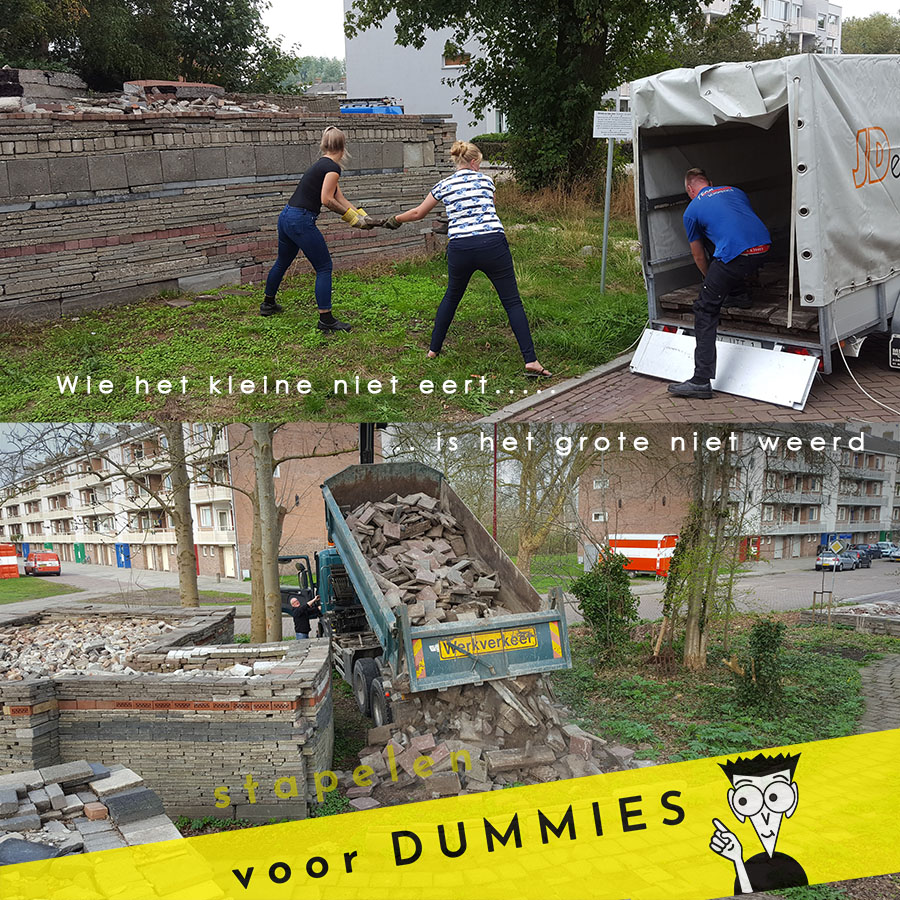
In the Netherlands, material becomes available on a regular basis, both from private individuals and contractors. Private individuals want a new garden and clear away their old patios. Contractors are commissioned to renew a footpath or a paved road. The material released in this process, preferably near the location where the ecocathedral is being created, can easily be placed there and processed on site.
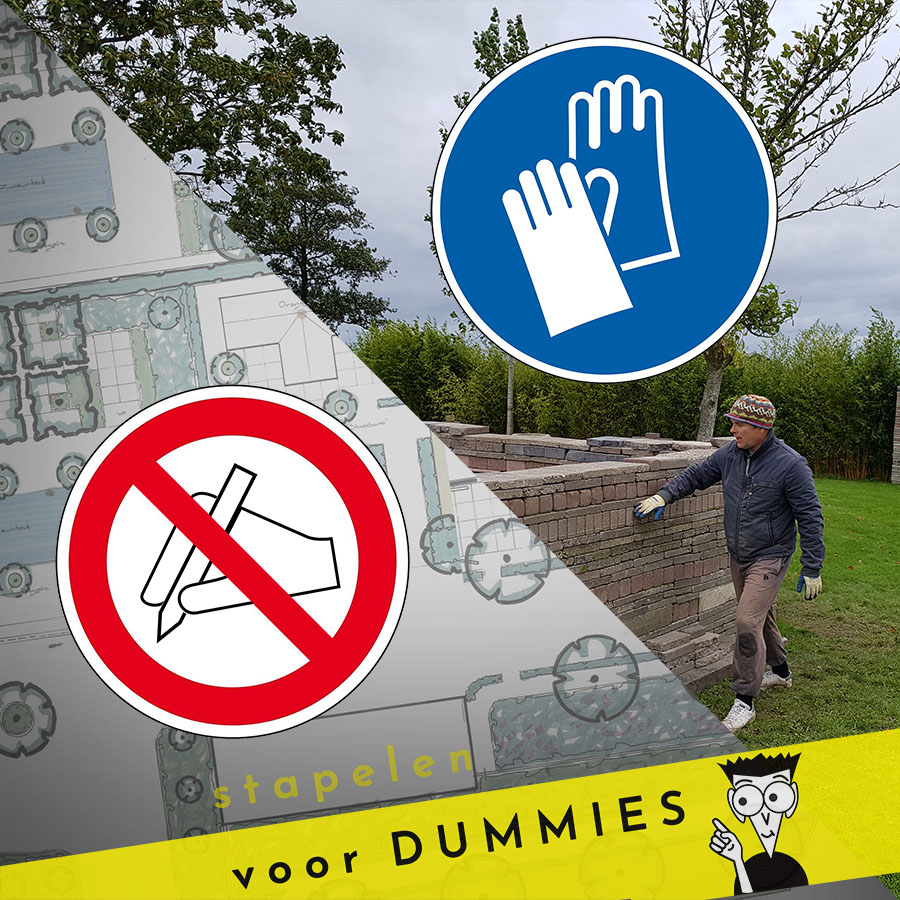
An ecocathedral develops organically. No design is made in advance; instead, work is carried out on-site from day one using the available materials. Just like natural processes, it is a continuous response to circumstances. The end goal is unknown and will never be reached, because it is an endless process.

Ecocathedrals form themselves 'under their own power'. Nature draws energy from the sun and water, and the stacking is done by human muscle power. Under their own power, therefore, possibly with mechanical aids such as a crowbar, wheelbarrow, shovels, and pipes to roll away curb stones. Only in exceptional cases are machines used to get the stones into place, or to saw off large branches from a tree if they pose a danger, but this must be kept to a minimum.
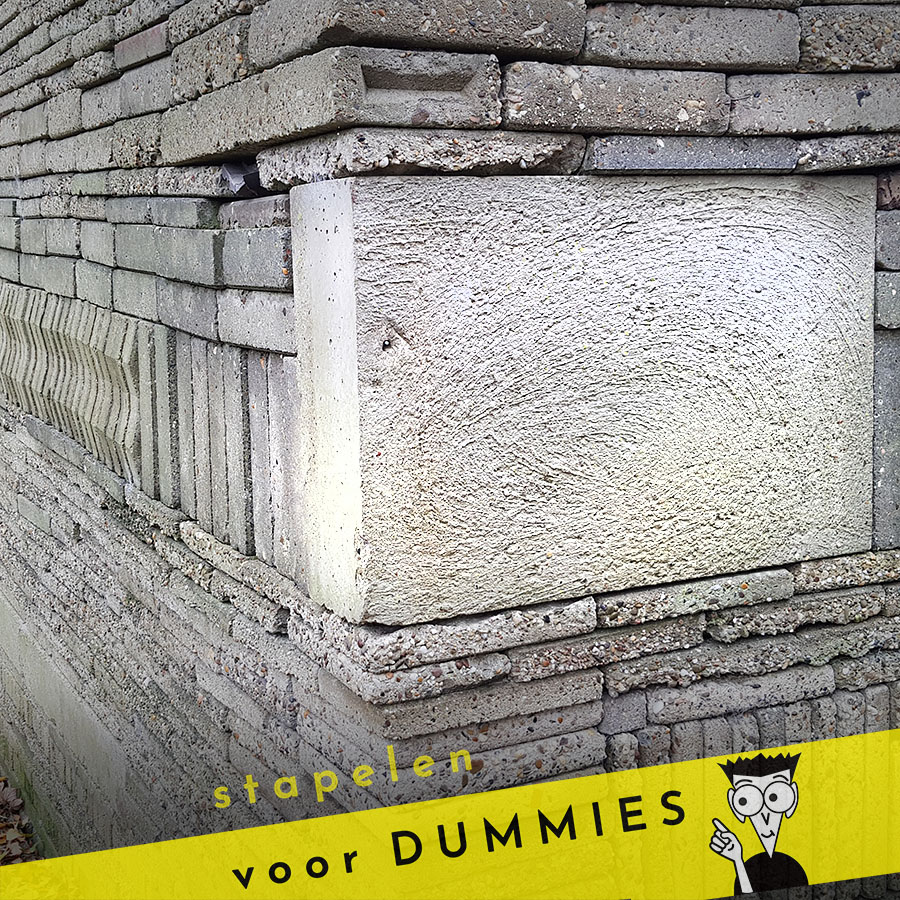
Cherish the large stones you receive! These are of great importance for the corners of your ecocathedral structure, both on the ground floor and higher up.
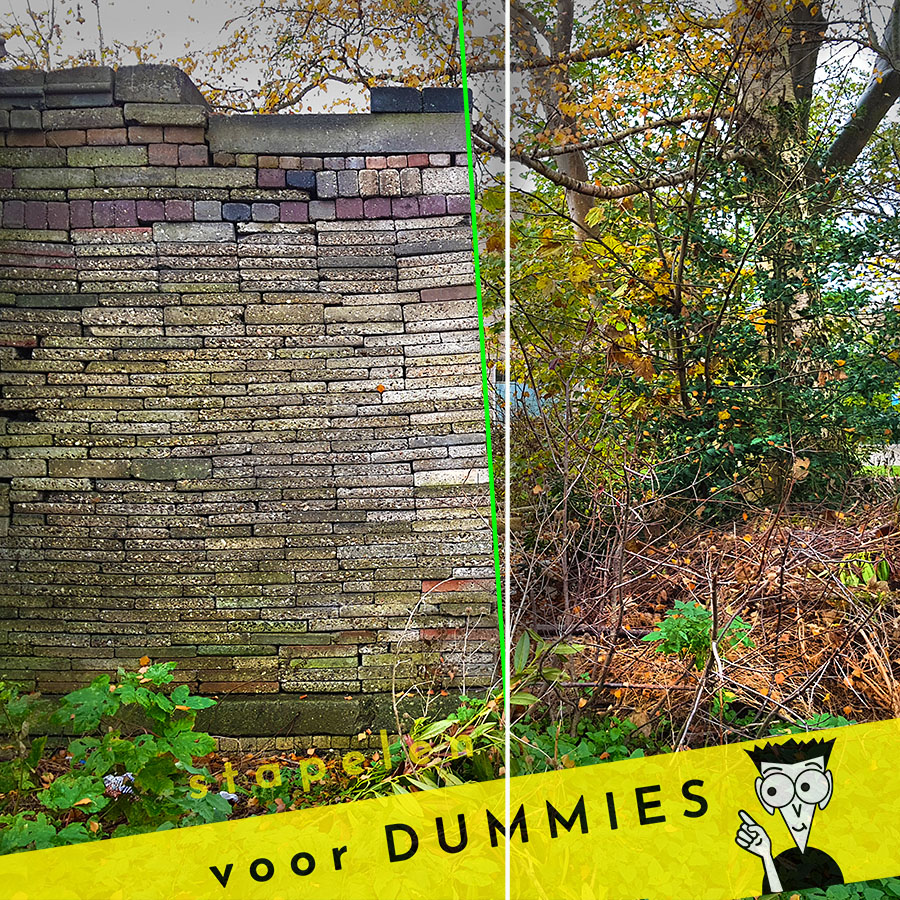
Most structures in an ecocathedral do not rise vertically, but are stacked inwards at a slight angle. As a result, the structure is also pushed inwards by gravity, which improves its stability.
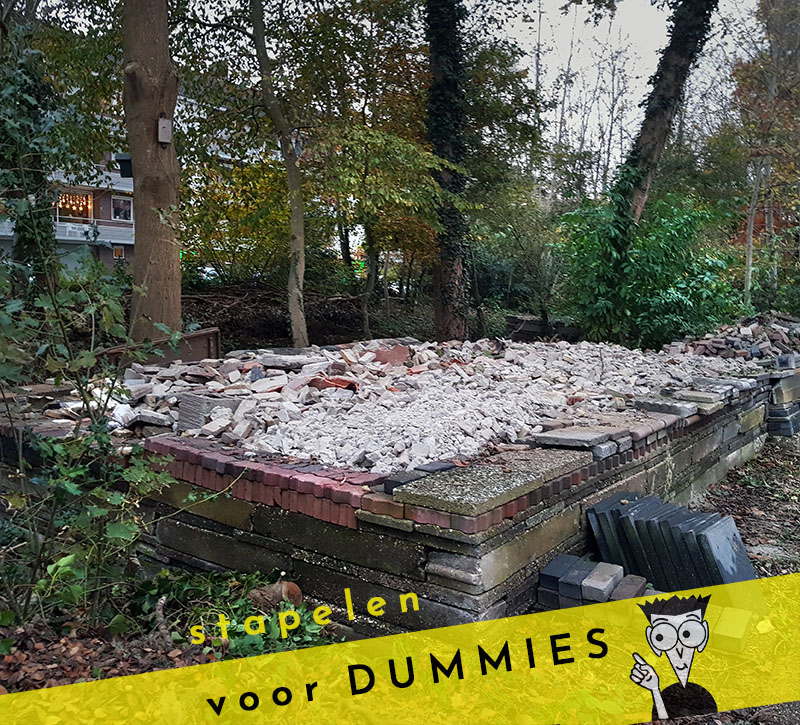
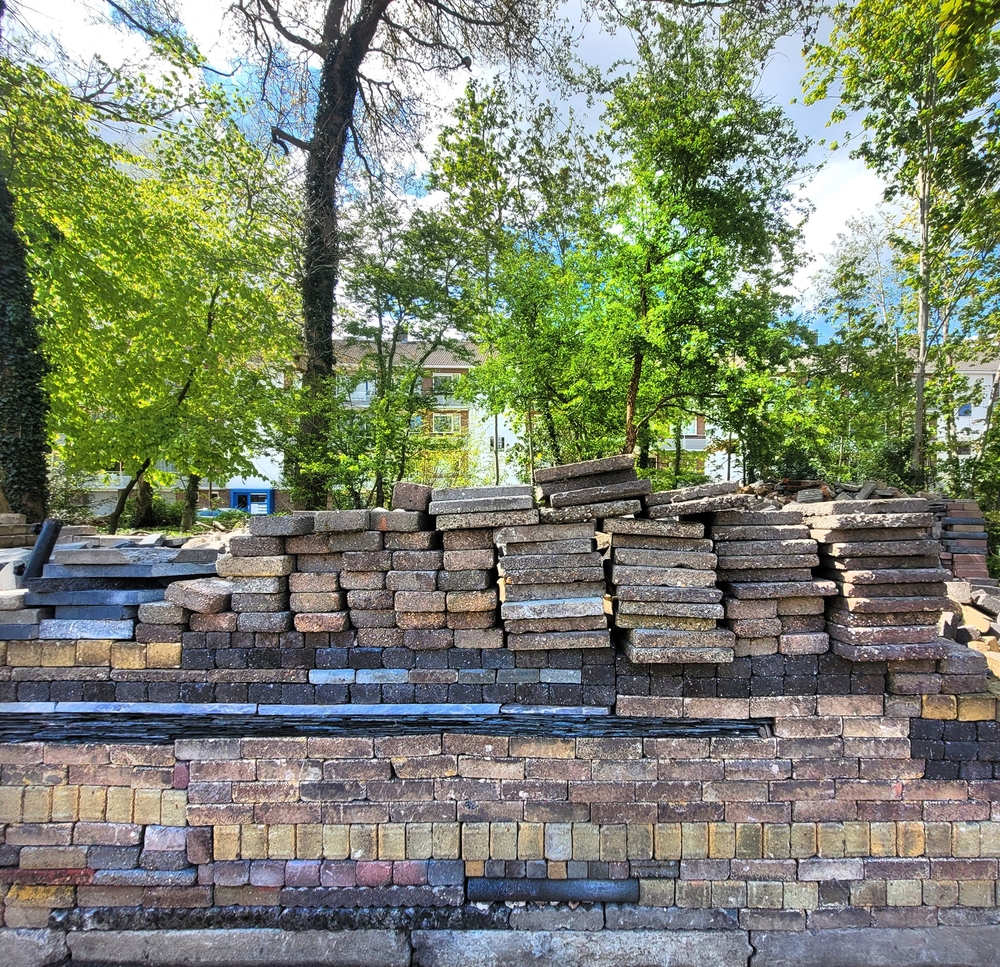
All stacked structures in an ecocathedral are solid. On the exterior, whole bricks, tiles, and kerbstones are stacked to a width of at least 2 tiles (60 cm). Broken bricks are used for the infill, as well as rubble from, for example, demolished walls. This so-called aggregate is a well-known method of foundation. Because it consists of both coarse and fine material, it is an ideal way to build sturdily, allowing construction to continue to great heights.