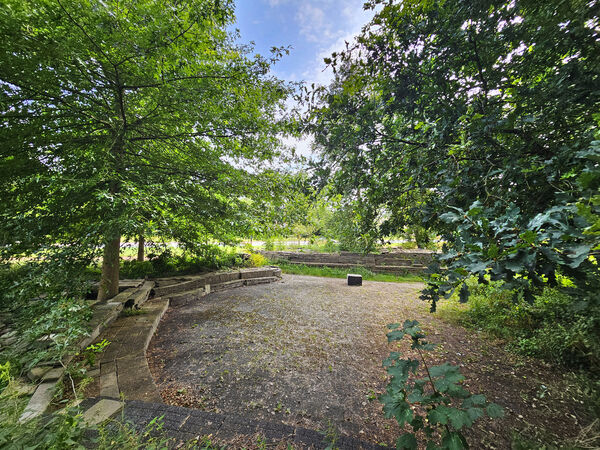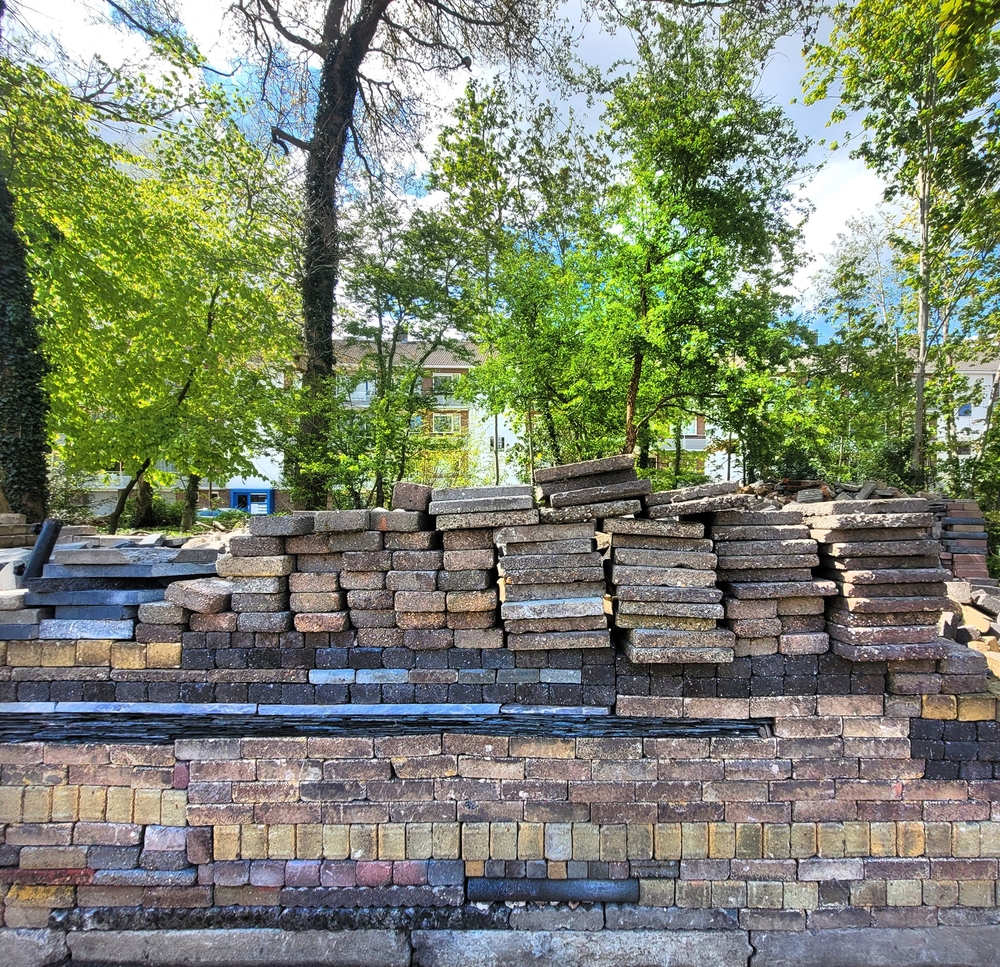
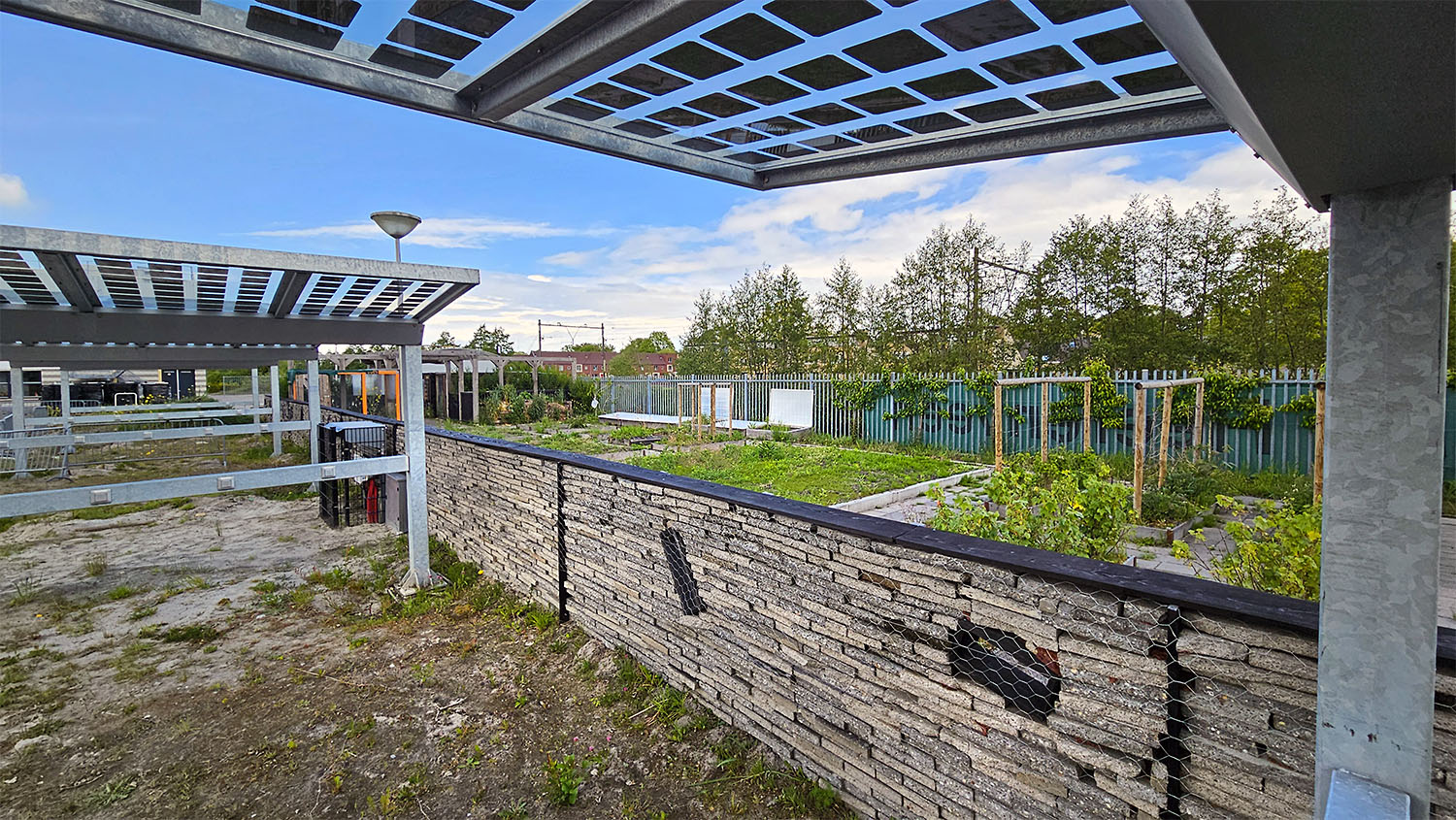
At the De Compagnie vocational school in Heerenveen, a former bicycle shed has been transformed by students into a vegetable garden with a dry stone wall and solar panels.
Maarten Springer, Green Studies teacher at De Companie , talks about the wonderful project:
The dry stone wall we built in our garden actually has two important purposes.
- First of all, we wanted to increase biodiversity in and around our vegetable garden. By building a dry stone wall, we create a warm, sunny, and sheltered spot where all kinds of beneficial insects can settle. Think of wild bees, ladybugs, and other insects that help with crop pollination and the natural control of pests.
- The second goal was the reuse of materials. For the wall, we used old tiles that came from a former bicycle shed. In this way, we give existing material a new life and show that sustainable gardening and working circularly can be very practical.
The wall was built together with the students. As a result, the project also had clear educational value: students learned about biodiversity, sustainability, collaboration, and practical building in the garden.
We have deliberately left open spaces and holes in the wall. When the wall is completely finished, we will fill it with natural nesting material such as:- cut bamboo stalks
- something twigs
- blocks of unprocessed hardwood
Holes of varying diameters (approximately 3–10 mm) are drilled into the wooden blocks so that diverse species of solitary bees and other insects can nest there. Through variation in material and hole size, an integrated insect hotel is created that becomes part of the wall itself.
The dry stone wall shows that you can create a functional, educational, and ecologically valuable element in the garden using simple means — good for insects, good for the vegetable garden, and good for raising awareness among students.
It is beautiful to see how tiles can be used to switch nature on instead of switching it off.
Also read the report on the practical lesson that students from De Compagnie took in the Le Roy garden in 2023.